

News
Top 10 Best Blogging Platform for Writers in 2025
Discover the best blogging platform for writers in 2025. Explore our top picks to find the perfect platform to showcase your writing skills and grow your audience.
In 2025, writers have more choices than ever to publish their work online, but this abundance can be overwhelming. How do you find the best blogging platform for writers when each one promises to be the perfect solution? It’s not just about finding a place to type; it’s about choosing a platform that enhances your writing process, helps you connect with an audience, and aligns with your long-term goals. Whether you're building a personal brand, monetizing your content, or documenting a startup journey, the right platform should feel like a partner. It needs to offer a seamless writing experience and the flexibility to grow.
This guide moves beyond generic feature lists to provide a practical, in-depth comparison of 12 leading options. As writers, getting your voice heard is paramount, and this often involves mastering the art of search engine optimization. You can discover effective SEO tips for blogs that can significantly boost your article's reach.
We will explore the unique strengths and honest limitations of each platform, from all-in-one solutions like Wix to specialized tools like Substack and Ghost. Our goal is to give you the clarity needed to choose the perfect home for your words, complete with screenshots and direct links for every entry.
1. Fanvaiy
Fanvaiy emerges as a premier choice and the best blogging platform for writers who prioritize efficiency, design, and powerful, built-in tooling. Crafted for founders, indie makers, and small teams, it eliminates the technical friction often associated with professional publishing, allowing you to focus purely on creating high-quality, SEO-friendly content from your own custom domain.
What truly sets Fanvaiy apart is its integration of an AI-powered drafting assistant. This isn't just a simple writing aid; it generates comprehensive outlines and initial drafts in seconds, dramatically accelerating the content creation lifecycle. For a marketing team needing to produce multiple articles weekly or a founder trying to build a content engine, this feature is a significant productivity multiplier.
The platform's commitment to a seamless user experience is evident in its distraction-free editor and elegant, mobile-responsive themes. With native Android and iOS apps, you can genuinely write, edit, and publish from anywhere, a crucial advantage for creators on the move.
Key Features & Analysis
- AI-Driven Drafting: Instantly generate outlines and first drafts to overcome writer's block and speed up content production.
- Built-in Analytics: Powered by Plausible, the platform offers clear, privacy-focused traffic insights without external scripts.
- Superior SEO: Strong default settings and per-post meta data customization ensure your content is primed for high search engine visibility from the start.
- Mobile-First Publishing: Fully functional native apps for both Android and iOS make it one of the best platforms for mobile content creation.
- Multilingual Support: Seamlessly publish content in various languages, including non-Latin scripts like Thaana.
Pricing: Fanvaiy offers a tiered subscription model. The Free plan is ideal for beginners, while the Professional and Business plans provide scalable limits and features for growing teams.
While advanced monetization tools are still forthcoming, Fanvaiy's current feature set provides an exceptionally strong foundation for professional publishing. It excels at its core mission: enabling writers to build a powerful, search-optimized blog with minimal effort and maximum impact.
Learn more about what Fanvaiy offers at fanvaiy.com.
2. Wix
Wix stands out as a powerful website builder that prioritizes visual design and ease of use, making it an excellent choice for writers who want a stunning blog without touching a line of code. Its intuitive drag-and-drop editor provides complete creative control, allowing you to build a unique online presence that reflects your personal brand. For writers who also sell books or services, Wix’s integrated e-commerce and marketing tools are a significant advantage.

This platform excels by offering a comprehensive, all-in-one solution. You can manage your blog, build an email list, and analyze your traffic from a single dashboard. While its free plan includes Wix branding, paid plans starting from $17/month (Light plan) offer a professional domain and remove ads. This makes Wix a strong contender for the best blogging platform for writers who value design flexibility and integrated functionality.
Key Details & Features
- Ideal Use Case: Writers who need a highly visual portfolio or blog and want an all-in-one platform with marketing and e-commerce capabilities.
- Pricing: Offers a free plan with ads. Paid plans range from the Light plan at $17/month to business plans for e-commerce.
- Pros: Extremely intuitive drag-and-drop editor, over 900 templates, and an extensive app market for added features.
- Cons: Once you choose a template, you cannot switch to another one. Performance can sometimes be slower on feature-heavy sites.
- Website: https://www.wix.com/
3. Squarespace
Squarespace is celebrated for its award-winning, design-forward templates that provide writers with a visually stunning and professional online presence right out of the box. It merges sophisticated aesthetics with an all-in-one platform, making it ideal for authors, journalists, and poets who want their website’s design to be as polished as their prose. Its integrated system handles everything from blogging and SEO to e-commerce, allowing writers to focus on creating content rather than managing technical details.

This platform shines by offering a curated and controlled environment where every element is designed to work together seamlessly. You can easily sell books, offer paid newsletters, or manage appointments directly from your dashboard. While there is no free plan, paid plans start at $16/month (billed annually) and include a custom domain, SSL security, and 24/7 support. For these reasons, Squarespace is a top-tier candidate for the best blogging platform for writers who prioritize premium design and integrated functionality.
Key Details & Features
- Ideal Use Case: Writers, authors, and journalists who demand a highly polished, professional aesthetic and an integrated platform for blogging, marketing, and selling products.
- Pricing: No free plan. Personal plans start at $16/month (billed annually), with Business plans offering more advanced features.
- Pros: Best-in-class, responsive design templates, a user-friendly drag-and-drop editor, and powerful built-in blogging and marketing tools.
- Cons: Fewer third-party app integrations compared to competitors and a slightly higher learning curve for complete beginners.
- Website: https://www.squarespace.com/
4. WordPress.com
WordPress.com offers a streamlined, hosted version of the powerful WordPress software, providing an excellent balance between user-friendliness and deep customization. It’s ideal for writers who want the robust functionality of WordPress without the technical responsibility of managing their own hosting. This platform allows you to start for free and scale up as your audience grows, making it a sustainable choice for a long-term writing career.
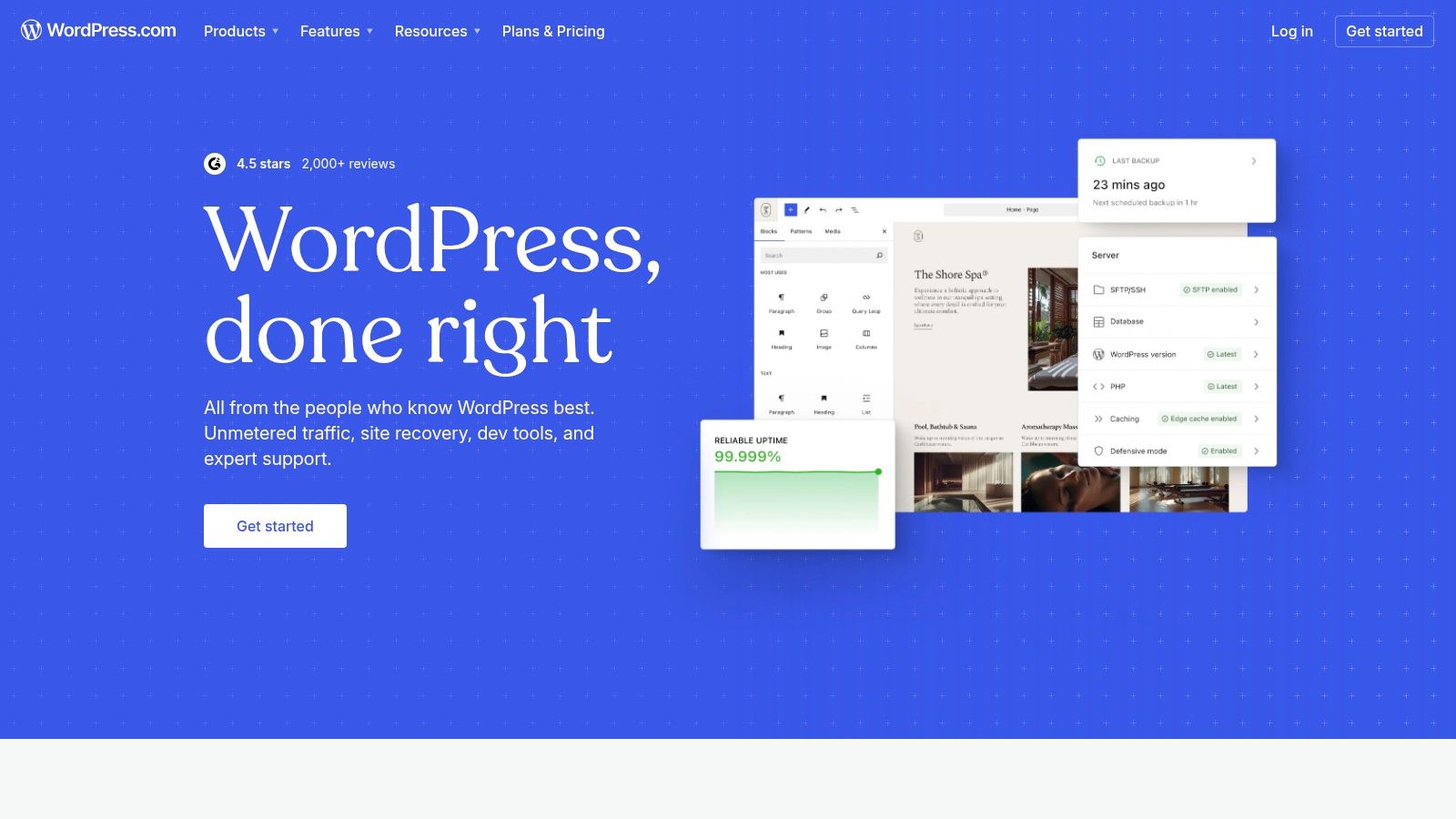
Its strength lies in its scalability and the immense ecosystem of themes and plugins available on higher-tier plans. For writers keen on extending WordPress's capabilities, exploring the right plugins is essential; these can provide insights into enhancing your blog's visibility and reach. For example, some of the 19 best WordPress plugins for SEO and social media marketing can transform your site into a powerful marketing tool. This makes WordPress.com the best blogging platform for writers who anticipate future growth and desire ultimate control over their site’s features.
Key Details & Features
- Ideal Use Case: Writers who want a powerful, scalable platform with strong community support and don't want to manage web hosting.
- Pricing: Offers a robust free plan. Paid plans start at $4/month (Personal) to unlock custom domains and remove ads, with higher tiers for plugins and e-commerce.
- Pros: Highly customizable with a vast plugin ecosystem on Business plans, scalable for growing blogs, and strong community support.
- Cons: The learning curve can be steeper than simpler builders. Key features like plugin installation are locked behind more expensive plans.
- Website: https://wordpress.com/
5. Medium
Medium is a unique hybrid, acting as both a publishing platform and a social network for writers and readers. It prioritizes high-quality content and community engagement, making it ideal for writers who want immediate access to a built-in audience without the technical overhead of managing a website. Its minimalist, distraction-free editor ensures the focus remains purely on the words, allowing your ideas to take center stage.
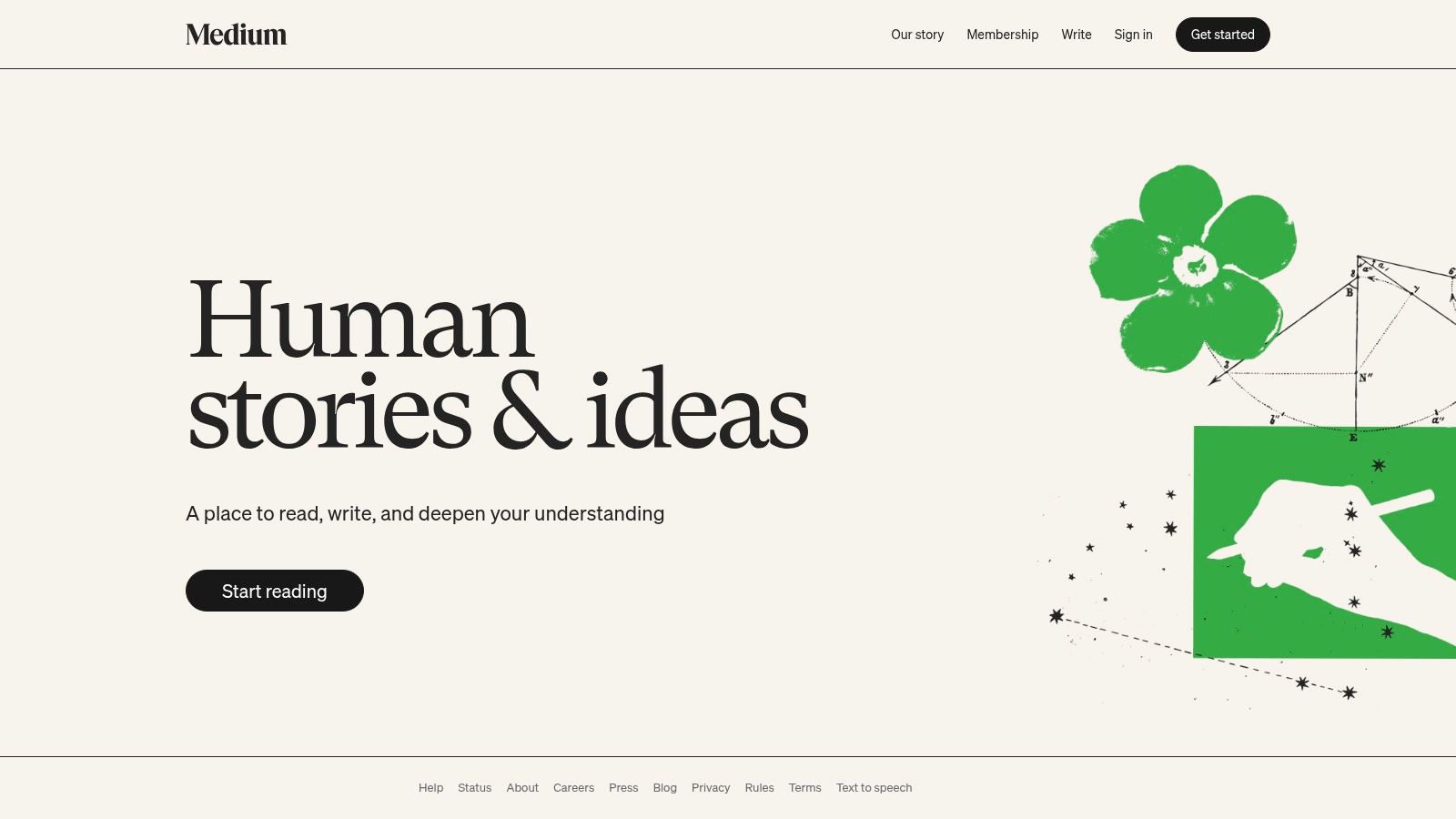
The platform's strength lies in its powerful network effect; your articles can be discovered by millions of engaged readers through its recommendation algorithm and topic-based curation. While it offers limited branding control, its potential for reach and monetization through the Medium Partner Program makes it a compelling choice. This makes Medium a contender for the best blogging platform for writers focused on building a readership and earning directly from their writing without any setup.
Key Details & Features
- Ideal Use Case: Writers who want to focus entirely on writing, tap into a pre-existing audience, and potentially earn money without managing their own site.
- Pricing: Free to publish. An optional membership for readers costs $5/month, which also funds the Partner Program.
- Pros: Immediate access to a massive, engaged readership, a clean and elegant writing interface, and no setup or maintenance required.
- Cons: No control over your own domain or branding, and you are subject to Medium’s platform rules and algorithm changes.
- Website: https://medium.com/
6. Substack
Substack has redefined the newsletter format, transforming it into a powerful direct-to-reader publishing and monetization tool. It's designed for writers who want to build a loyal community and generate revenue directly from their audience through paid subscriptions. The platform strips away technical complexities, allowing you to focus purely on creating high-quality content, whether that's written articles, podcasts, or videos.
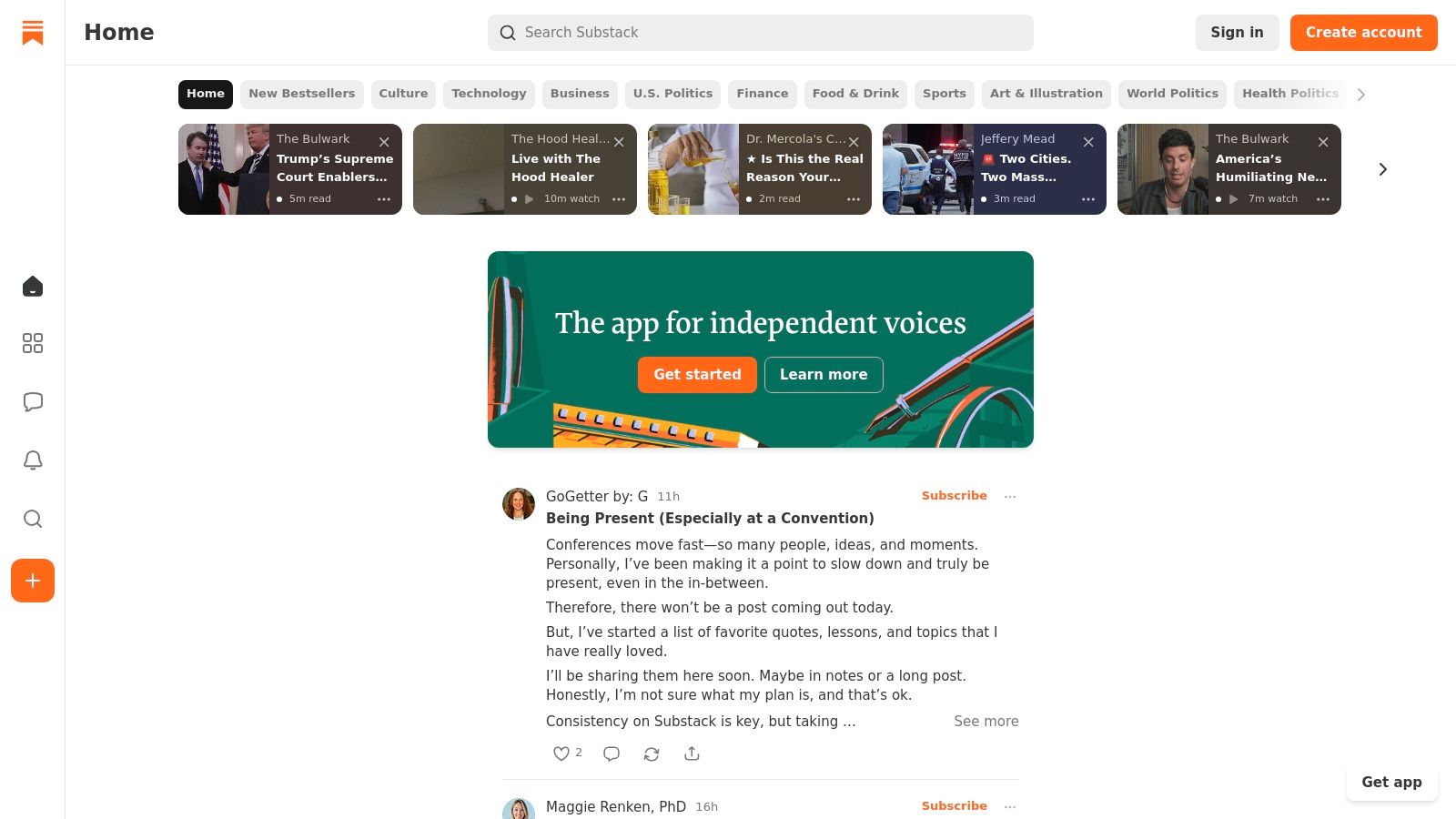
This platform excels by making monetization incredibly straightforward. With built-in payment processing and subscription management, you can launch a paid newsletter in minutes. While Substack is free to use, it takes a 10% cut of revenue from paid subscriptions, plus payment processing fees. For writers prioritizing a direct relationship with their readers and seeking a simple path to monetization, Substack is arguably the best blogging platform for writers focused on the newsletter model.
Key Details & Features
- Ideal Use Case: Journalists, experts, and niche writers who want to monetize their content directly through paid email subscriptions.
- Pricing: Free to publish. Substack takes a 10% commission on paid subscription revenue.
- Pros: Extremely simple setup, direct monetization model, and fosters a strong connection with a dedicated readership.
- Cons: Very limited design and customization options. Your success is entirely dependent on building and growing an email list.
- Website: https://substack.com/
7. Ghost
Ghost is a powerful, open-source platform built specifically for professional writers and publishers who prioritize content and monetization. It offers a minimalist, distraction-free writing environment using a clean Markdown editor, allowing creators to focus purely on their craft. Its modern technology stack ensures exceptional speed and performance, directly contributing to better SEO and reader experience.
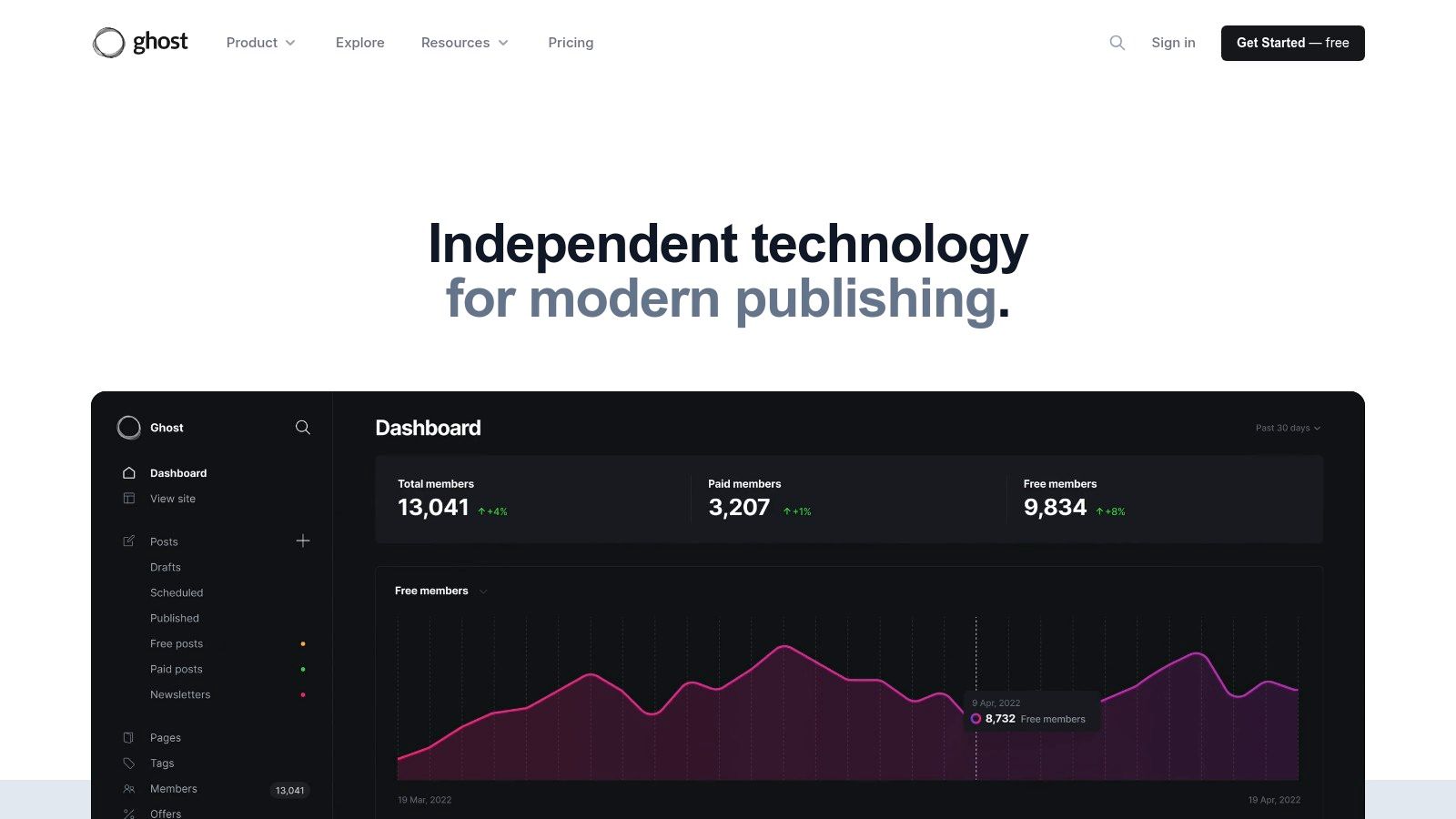
The platform's standout feature is its native support for memberships and subscriptions, enabling writers to build a direct relationship with their audience and generate revenue without third-party tools. While it requires either self-hosting or a paid Ghost(Pro) plan starting at $9/month, its robust feature set makes it the best blogging platform for writers serious about creating a sustainable, independent publication.
Key Details & Features
- Ideal Use Case: Professional writers, journalists, and creators who want to build a membership-based publication with a focus on speed and user experience.
- Pricing: Requires self-hosting or a managed Ghost(Pro) plan, which starts at $9/month for the Starter tier.
- Pros: Excellent performance and security, built-in monetization tools for memberships, and a beautiful, distraction-free Markdown editor.
- Cons: Requires more technical setup if self-hosting and has a smaller plugin ecosystem compared to giants like WordPress.
- Website: https://ghost.org/
8. Weebly
Weebly offers a straightforward and accessible entry point for writers who want a functional blog without a steep learning curve. Its drag-and-drop editor simplifies the website creation process, making it ideal for those who prioritize ease of use and quick setup. For writers who plan to sell books, merchandise, or services directly to their readers, Weebly’s integrated e-commerce features, powered by Square, provide a seamless path to monetization.
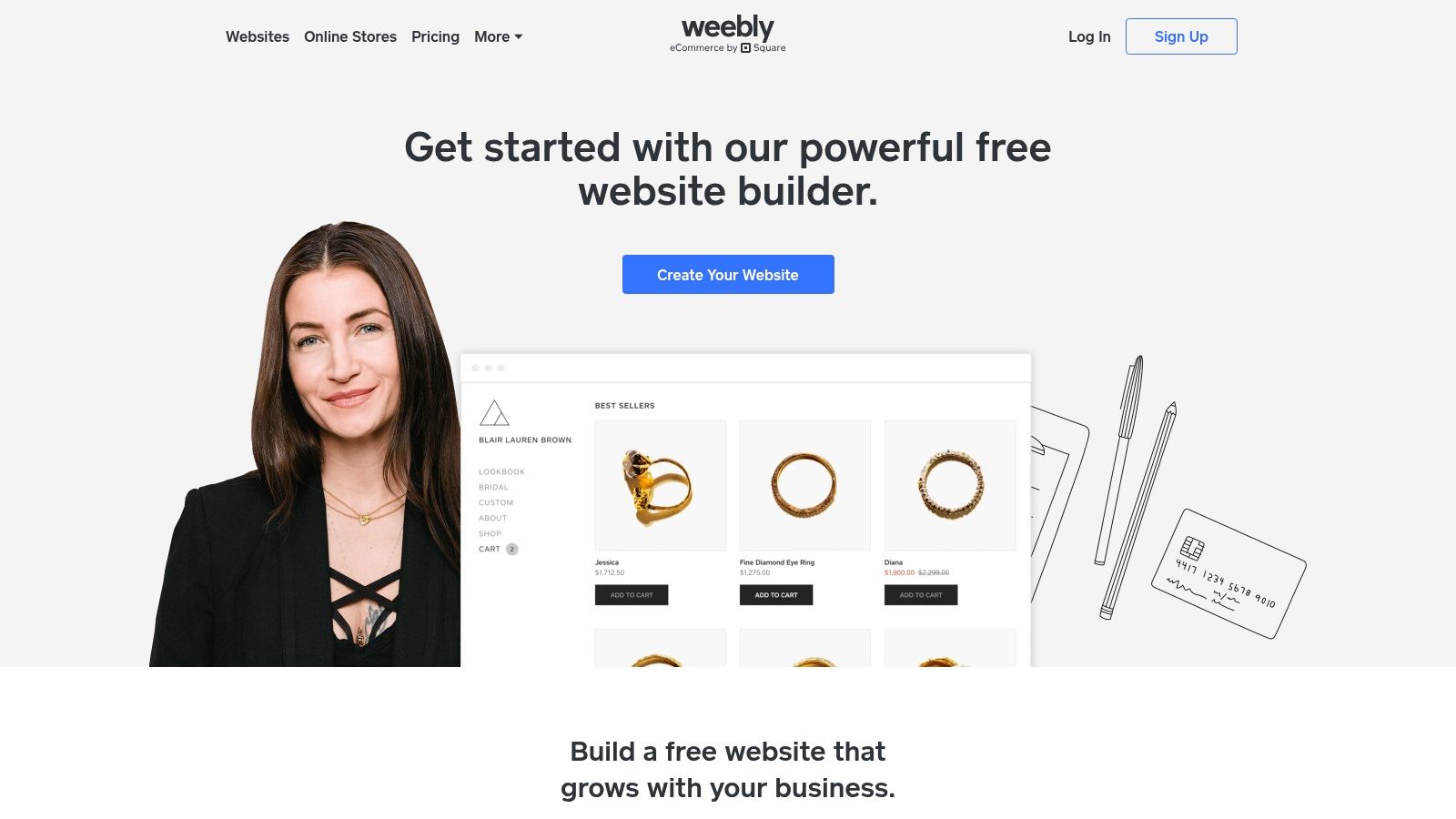
This platform shines by balancing simplicity with essential functionality. You get a clean blogging interface, customizable templates, and useful tools like SEO and marketing integrations without feeling overwhelmed. While the free plan includes Weebly branding, paid plans starting from $10/month (when paid annually) unlock custom domains and advanced features. This makes Weebly a solid choice for the best blogging platform for writers seeking a no-fuss solution that can grow with their author business.
Key Details & Features
- Ideal Use Case: Beginner bloggers or authors who need a simple, all-in-one solution with integrated e-commerce capabilities for selling products.
- Pricing: A free plan is available. Paid plans start at $10/month (billed annually) for the Personal plan and go up for more features.
- Pros: Very easy for beginners to use, strong built-in e-commerce features, and a helpful app center for adding functionality.
- Cons: Design flexibility is more limited compared to competitors like Wix or Squarespace, and it has fewer advanced features than WordPress.org.
- Website: https://www.weebly.com/
9. Blogger
Blogger is one of the original blogging platforms, offering a completely free and straightforward way for writers to get their work online. Owned by Google, its main strength lies in its simplicity and reliability, making it an excellent starting point for new writers or hobbyists who want a no-fuss platform. You can start publishing content within minutes of creating an account, all hosted on Google's powerful infrastructure.

The platform integrates seamlessly with other Google services, including Google Photos for image hosting and AdSense for easy monetization. While it lacks the advanced features and design flexibility of its competitors, its free-forever model with no hidden costs is a major draw. For writers who prioritize ease of use and cost-effectiveness over customization, Blogger remains a contender for the best blogging platform for writers on a tight budget.
Key Details & Features
- Ideal Use Case: Beginners, casual writers, and hobbyists looking for a completely free and easy-to-use platform to test the waters of blogging.
- Pricing: 100% free, including hosting and a
blogspot.comsubdomain. You can connect a custom domain for a small annual fee. - Pros: Completely free to use with reliable uptime, incredibly simple setup process, and easy integration with Google AdSense for monetization.
- Cons: Limited design and customization options, fewer features than other modern platforms, and less flexibility for future growth.
- Website: https://www.blogger.com/
10. Tumblr
Tumblr carves out a unique space as a microblogging platform that merges blogging with social networking. It's an ideal environment for creative writers, poets, and artists who thrive on community engagement and visual storytelling. The platform’s strength lies in its simplicity and multimedia focus, making it easy to share short-form content, from a single paragraph of prose to a striking image paired with a caption.
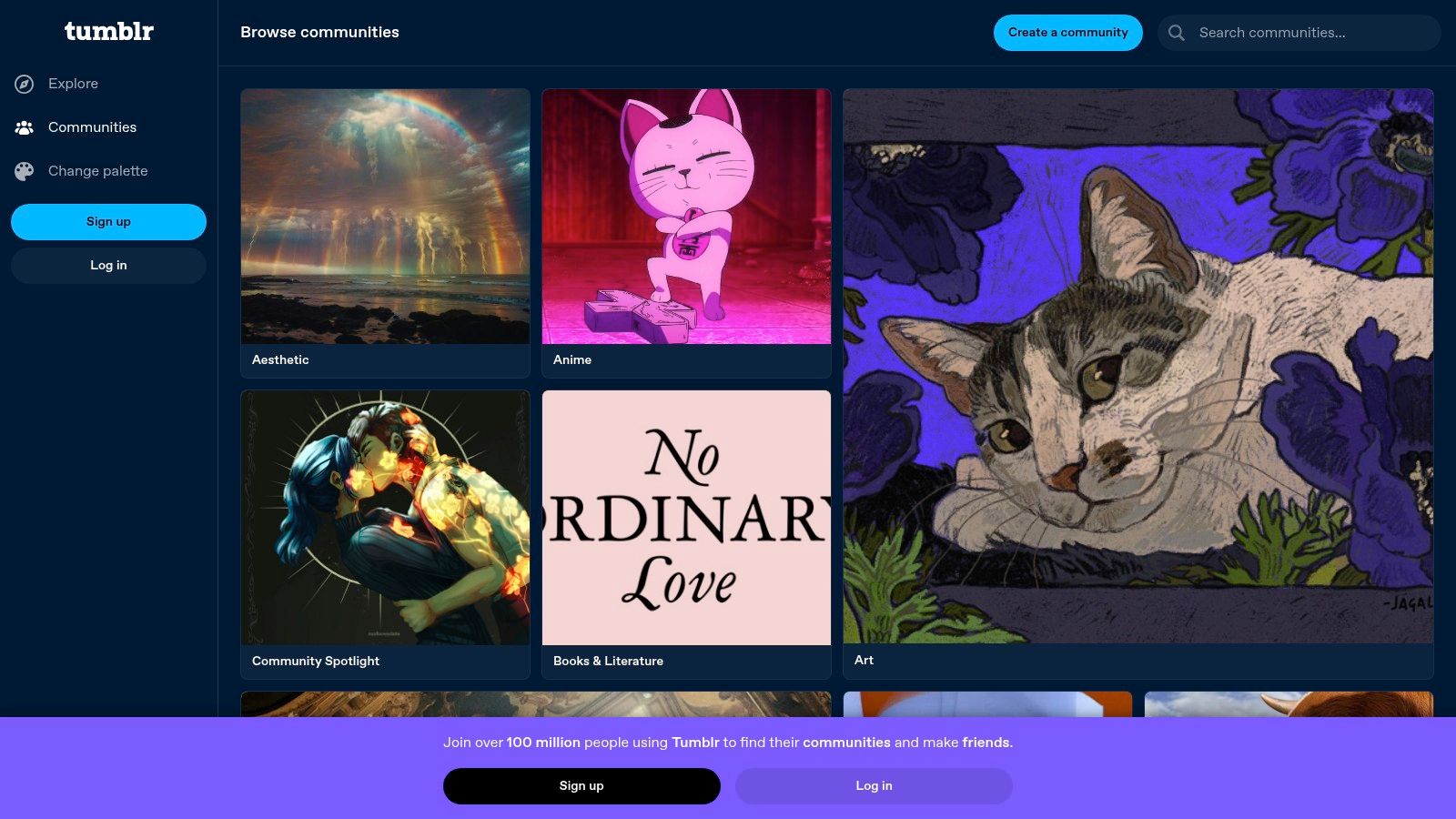
This platform excels at content discovery through its reblogging and tagging system, allowing your work to find a new audience organically. While it's not designed for building a professional, monetized brand, it offers an unparalleled space for creative expression and finding a like-minded community. For writers looking to experiment with different formats and connect with readers in a more informal, social setting, Tumblr can be the best blogging platform for writers who prioritize community over commerce.
Key Details & Features
- Ideal Use Case: Creative writers, poets, and artists focused on short-form, multimedia content and community interaction.
- Pricing: Completely free to use. Optional premium themes are available for purchase from third-party creators.
- Pros: Extremely easy to use with a vibrant, built-in community. Excellent support for various media types and content discovery.
- Cons: Limited monetization options and not well-suited for traditional long-form blogging or professional portfolio building.
- Website: https://www.tumblr.com/
11. HubSpot CMS
HubSpot CMS is an enterprise-grade content management system designed for writers and businesses heavily focused on inbound marketing and lead generation. It combines a user-friendly blogging platform with a powerful suite of marketing, sales, and service tools. This integration allows writers to not only publish content but also to track its performance, capture leads, and nurture an audience directly within a single ecosystem.
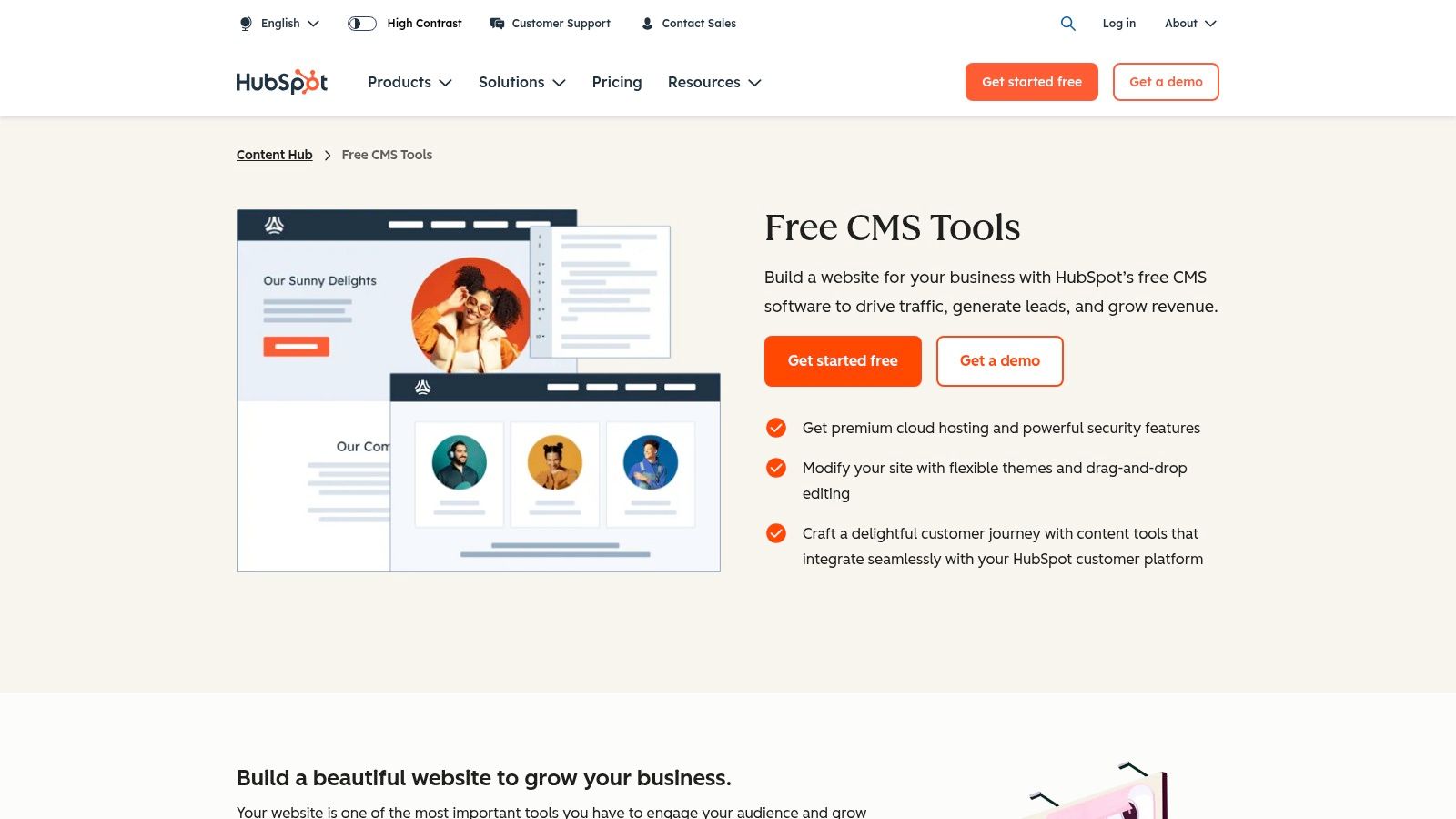
The platform’s strength lies in its data-driven approach. You get built-in SEO recommendations and robust analytics that tie content performance directly to business goals. While the free plan is limited, paid tiers unlock its full potential. HubSpot CMS is arguably the best blogging platform for writers whose primary goal is to convert their readership into a customer base, making it ideal for content-driven businesses, consultants, and professional authors.
Key Details & Features
- Ideal Use Case: Business-oriented writers, content marketers, and authors who want to use their blog for lead generation and customer acquisition.
- Pricing: Offers a free CMS with HubSpot branding. Paid plans start at $23/month for the Starter tier, scaling up significantly with advanced features.
- Pros: Seamless integration with HubSpot's CRM and marketing tools, powerful built-in SEO features, and excellent analytics for tracking ROI.
- Cons: Can be expensive compared to other blogging platforms, and its extensive features might be overkill for writers with simpler needs.
- Website: https://www.hubspot.com/products/cms
12. Jekyll
Jekyll is a static site generator that caters to developers and technically-inclined writers who prefer a code-centric workflow. It transforms plain text files, typically written in Markdown, into a complete, ready-to-deploy static website. This approach eliminates databases and server-side processing, resulting in exceptionally fast and secure sites. For writers comfortable with Git and the command line, Jekyll offers unparalleled control and performance.
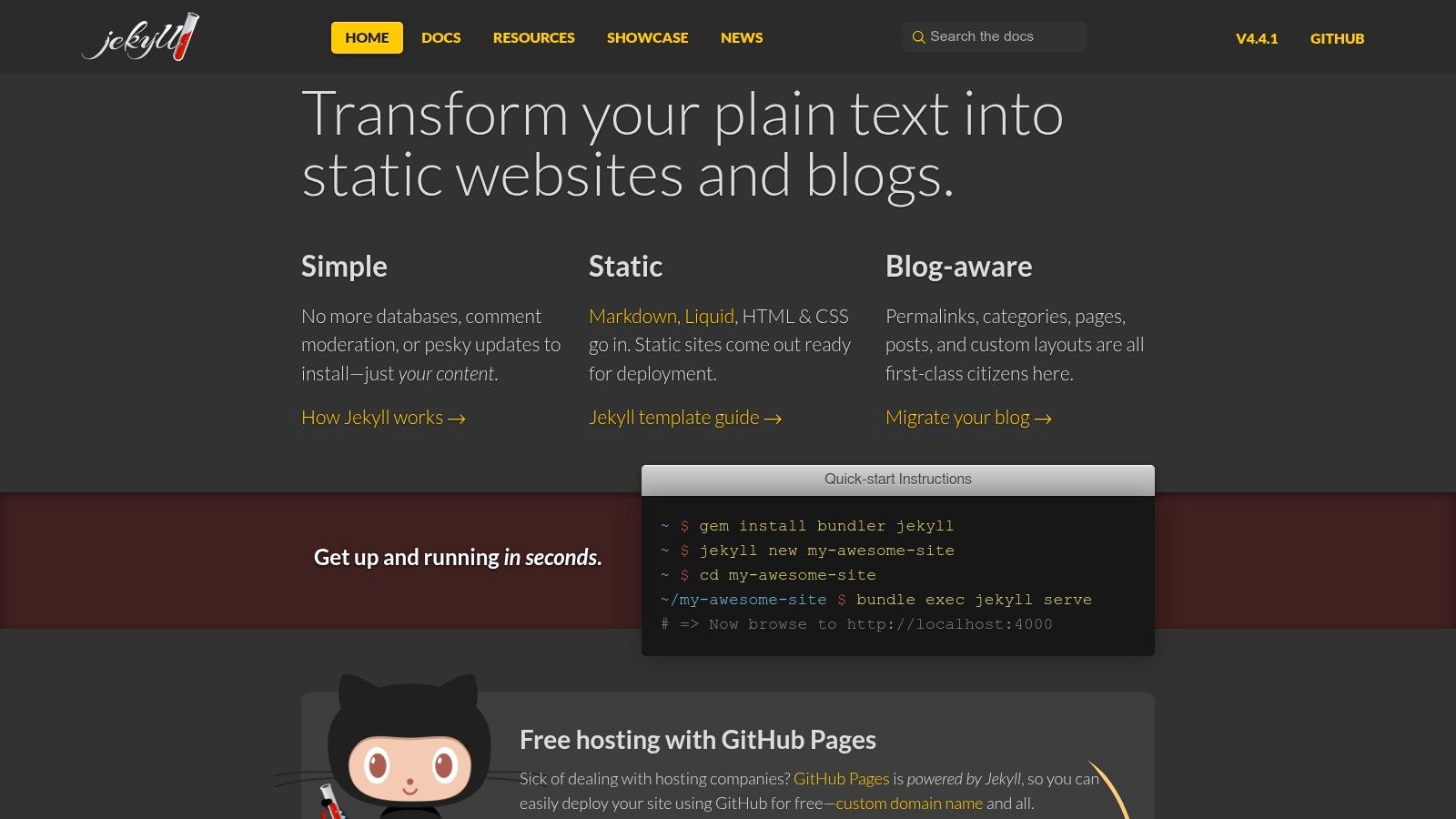
The platform's standout feature is its seamless integration with GitHub Pages, which provides free, reliable hosting for Jekyll sites. This makes it an incredibly cost-effective solution for publishing content. While it lacks a graphical user interface, its focus on simplicity and efficiency makes it a strong candidate for the best blogging platform for writers who value speed, security, and complete ownership over their content and codebase.
Key Details & Features
- Ideal Use Case: Tech-savvy writers, developers, and academics who want a fast, secure, and highly customizable blog and are comfortable with a code-based workflow.
- Pricing: Completely free and open-source software. Hosting can be free via services like GitHub Pages.
- Pros: Incredible performance and security, full control over site design, and content is managed in simple text files.
- Cons: Steep learning curve for non-developers and lacks a user-friendly admin panel for writing or site management.
- Website: https://jekyllrb.com/
Top 12 Blogging Platforms Features Comparison
| Platform | Core Features/Characteristics | User Experience & Quality ★ | Value Proposition 💰 | Target Audience 👥 | Unique Selling Points ✨ | Price Points 💰 |
|---|---|---|---|---|---|---|
| 🏆 Fanvaiy | SEO-friendly, AI drafting, mobile apps, analytics | ★★★★☆ High performance & polish | Flexible plans, scalable for individuals & teams | Writers, indie makers, teams | AI-powered drafting, multilingual support, Plausible analytics | Free to Business tiers |
| Wix | Drag-and-drop builder, 900+ templates, SEO tools | ★★★☆☆ Beginner-friendly | Versatile for various site types | Beginners, small businesses | AI-assisted design, extensive app market | Free + Paid plans |
| Squarespace | Designer templates, built-in blog & e-commerce | ★★★★☆ Sleek, professional design | All-in-one platform | Creatives, writers prioritizing aesthetics | High-quality templates, robust marketing tools | Paid subscriptions only |
| WordPress.com | Themes/plugins ecosystem, SEO, analytics | ★★★★☆ Highly customizable | Scalable with large plugin ecosystem | Intermediate to advanced users | Vast plugins, strong community support | Free + Paid tiers |
| Medium | Built-in audience, distraction-free writing | ★★★☆☆ Content focused | No setup needed, audience access | Writers seeking exposure | Large readership, Partner monetization | Free + Partner program |
| Substack | Newsletter focus, subscription payments | ★★★☆☆ Simple to use | Direct monetization via subscriptions | Newsletter creators, podcasters | Built-in payments, podcast & video support | Free + revenue share |
| Ghost | Markdown editor, memberships, SEO tools | ★★★★☆ Fast, clean interface | Flexible monetization | Professional publishers | Memberships, subscriptions, open source | Free self-host / Paid Ghost(Pro) |
| Weebly | Drag-and-drop builder, e-commerce, SEO | ★★★☆☆ Easy for beginners | Blogging + e-commerce | Beginners, small shops | Simple setup, app center | Free + Paid plans |
| Blogger | Simple editor, Google integration | ★★☆☆☆ Basic & reliable | Fully free with hosting | Casual bloggers, beginners | Google services integration, free hosting | Completely free |
| Tumblr | Microblogging, social features, multimedia | ★★★☆☆ Community-driven | Free with premium theme options | Creative writers, artists | Reblogging, multimedia posts | Free + Premium themes |
| HubSpot CMS | CMS + marketing tools, CRM integration | ★★★★☆ Marketing-focused | Strong inbound marketing | Marketers, inbound-focused writers | SEO recommendations, CRM integration | Paid plans only |
| Jekyll | Static site generator, Markdown support | ★★★★☆ High performance | Full control, fast & secure | Developers, tech-savvy writers | Static site speed, GitHub Pages integration | Free (self-hosted) |
Choosing the Right Stage for Your Stories
Navigating the landscape of blogging platforms can feel as complex as plotting a novel, but the goal is simple: find a home for your words that empowers, rather than hinders, your creative process. As we've explored, the best blogging platform for writers is not a one-size-fits-all solution. It's a deeply personal choice tethered to your individual goals, technical acumen, and long-term vision.
Your decision should hinge on a clear-eyed assessment of your needs. Are you a novelist building an author platform? A tech writer sharing tutorials? A poet seeking a minimalist aesthetic? Each path points toward a different tool. We've seen how platforms like Wix and Squarespace offer unparalleled visual control, making them ideal for writers who think like designers. In contrast, Substack and Ghost have cornered the market on direct monetization, providing a streamlined path from prose to profit for those building a loyal, paid readership.
Key Factors for Your Final Decision
Before you commit, step back and consider these critical factors. Your choice today will influence your workflow, growth potential, and audience engagement for years to come.
- Technical Comfort vs. Customization: Be honest about your technical skills. A platform like WordPress.org (via a host) or a static site generator like Jekyll offers infinite control but demands a steeper learning curve. Conversely, tools like Fanvaiy, Wix, or Blogger prioritize ease of use, letting you focus entirely on writing.
- Monetization Strategy: How do you plan to make money? If it's through subscriptions and newsletters, Substack and Ghost are purpose-built for you. If your model involves ad revenue, affiliate marketing, or selling digital products, a flexible platform like WordPress or an all-in-one like Squarespace provides more robust options.
- Growth and Scalability: Consider your five-year plan. A simple platform like Medium is great for discoverability but offers limited ownership. A self-hosted Ghost or WordPress installation provides a scalable foundation you'll never outgrow. For indie makers and startups, a platform with integrated SEO and AI tools like Fanvaiy is built for scaling your content engine from day one.
- Community vs. Independence: Do you want to tap into an existing ecosystem like Medium or Tumblr, or build your own independent brand? The former offers built-in discovery, while the latter grants you complete control over your audience relationship and data.
From Platform to Practice
Ultimately, your platform is just the stage. The real work begins once you start publishing. Choosing the right tool removes technical friction, but attracting and retaining an audience requires a deliberate strategy. Once you've chosen the ideal platform for your stories, understanding how to effectively reach your audience is crucial. Implement these content marketing best practices to ensure your voice is heard above the noise.
The perfect platform should feel like an extension of your own mind, a silent partner that handles the technical details so you can do what you do best: write. Don't get paralyzed by the options. Pick the one that aligns most closely with your current needs, knowing you can always migrate later. The most important step is the one you take now. Start writing, start publishing, and start sharing your unique perspective with the world.
Ready to stop comparing and start creating? Fanvaiy is the all-in-one blogging platform designed specifically for writers, indie makers, and content creators who value speed, simplicity, and powerful built-in tools. With writer-focused AI, automated SEO, and a beautifully minimalist editor, you can launch your blog in minutes and focus on your craft. Try Fanvaiy today and build the blog you've always envisioned.
Article created using Outrank

Author
Fanvaiy
Leave a comment
Comments
No comments yet. Be the first to comment!
Latest Posts
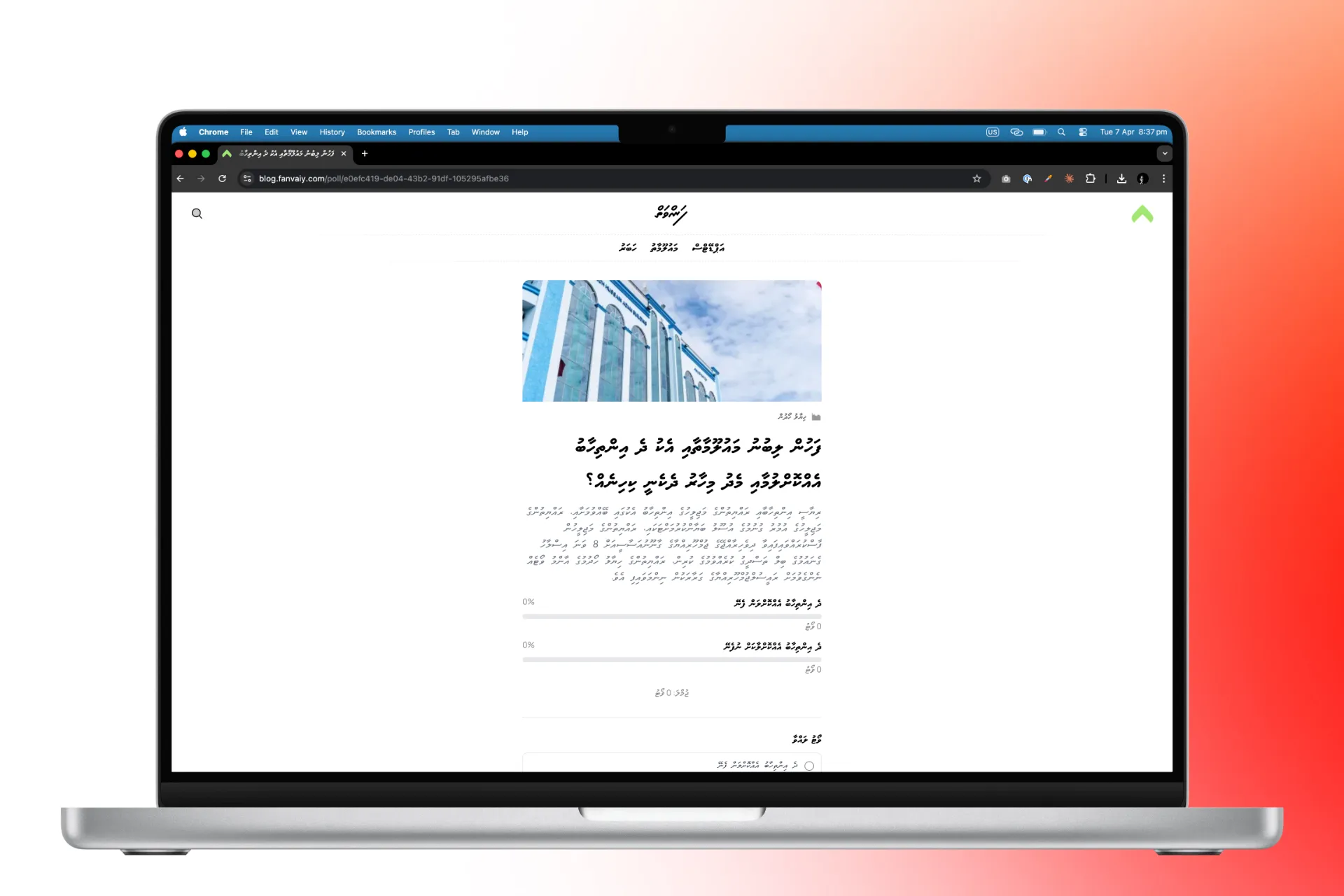
Introducing SMS Polls & Messaging Integration — Engage Your Audience Like Never Before
07 April 2026
0

We Built a Dhivehi Wordle
18 February 2026
0

Turn Your Blog Posts Into Audio: How Text-to-Speech Is Changing the Blogging Game
18 February 2026
0

Why Creators Are Ditching Traditional Blogging Platforms in 2025
08 December 2025
0

Why Every Indie Maker Needs a Blog (Not Just Twitter)
03 December 2025
0

How to Write SEO-Friendly Blog Posts (Beginner Guide)
03 December 2025
0